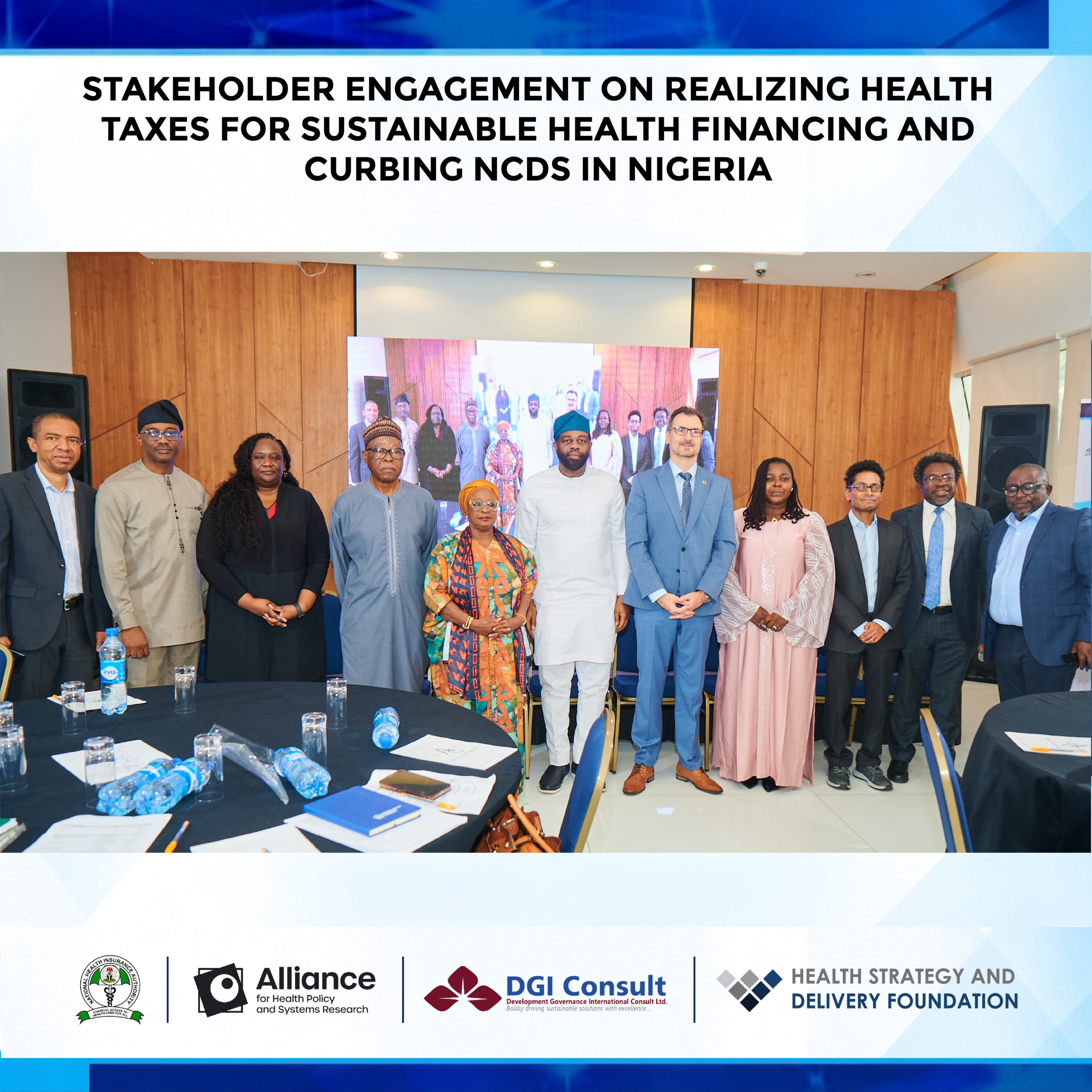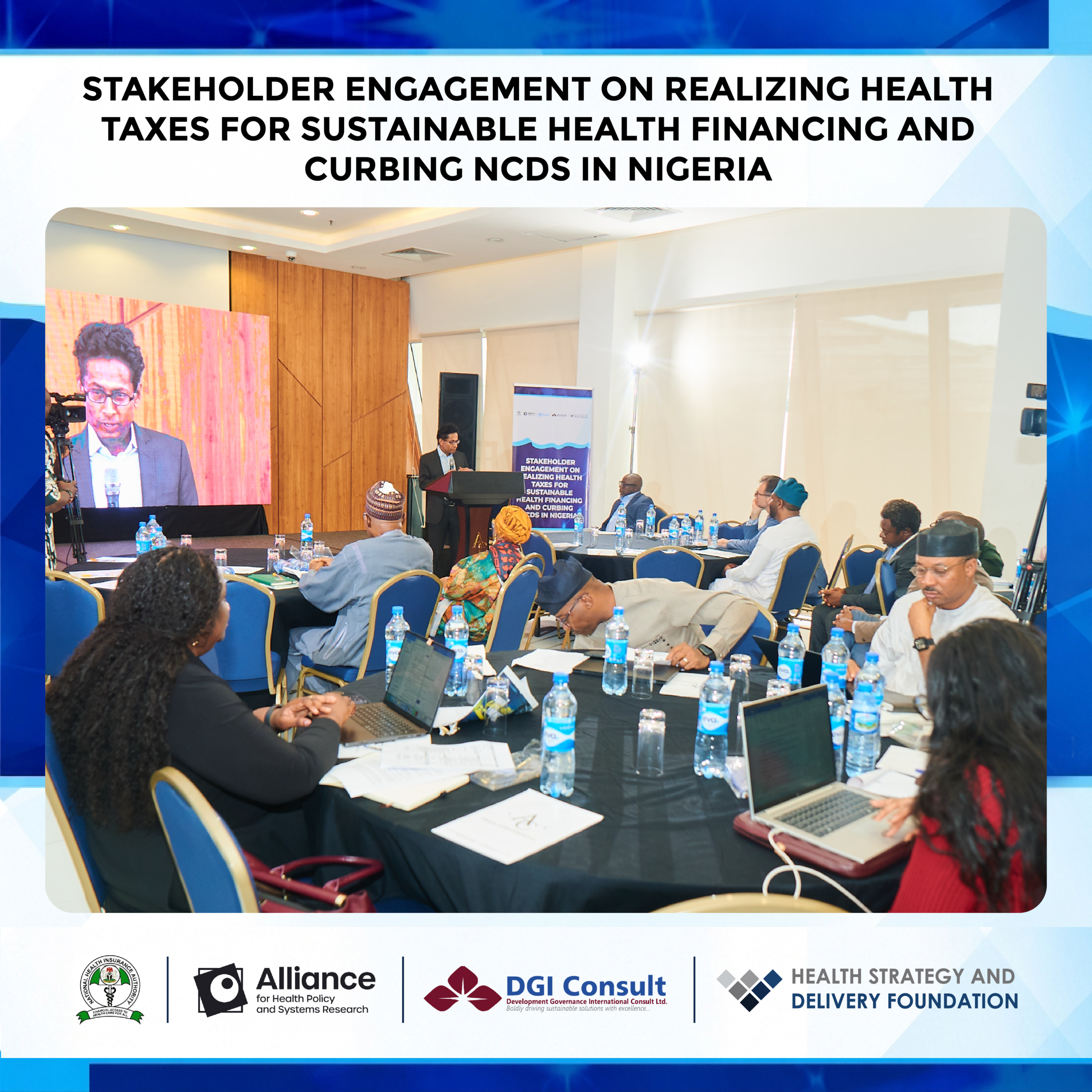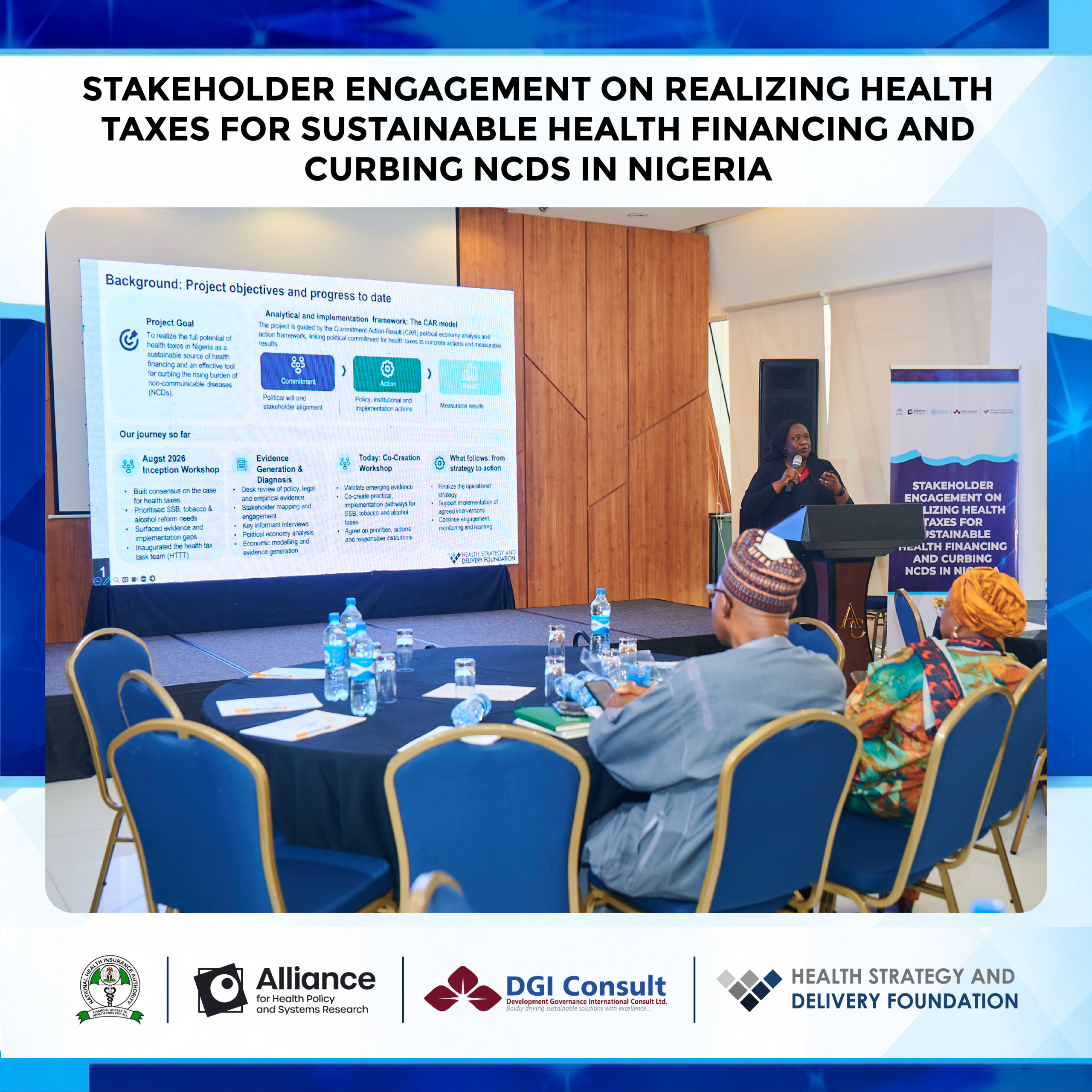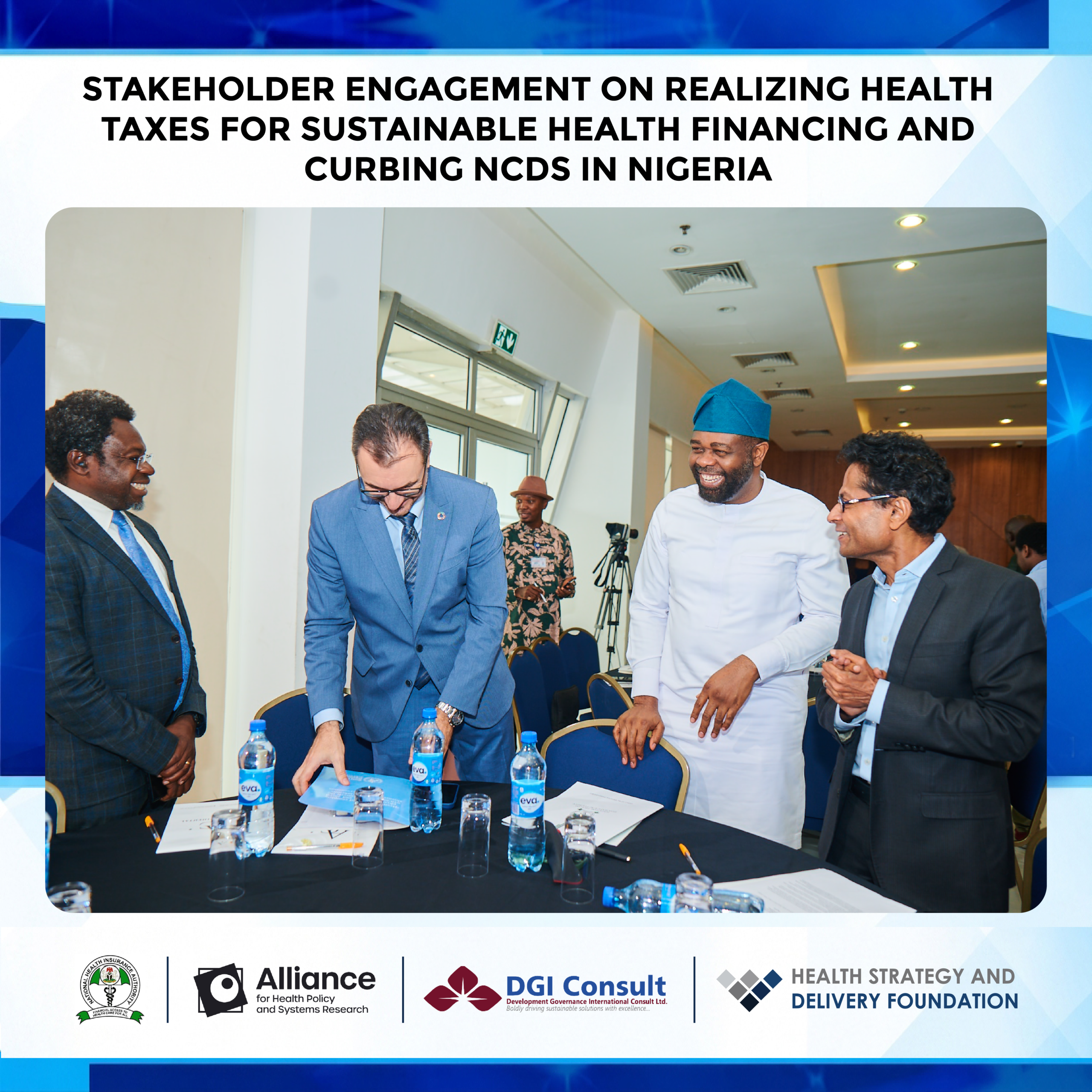

Following the recent national stakeholder co-creation workshop on realising health taxes for sustainable health financing and curbing non-communicable diseases in Nigeria, one question stood at the centre of the discussions:
What will it take to make health-tax reform work in Nigeria?
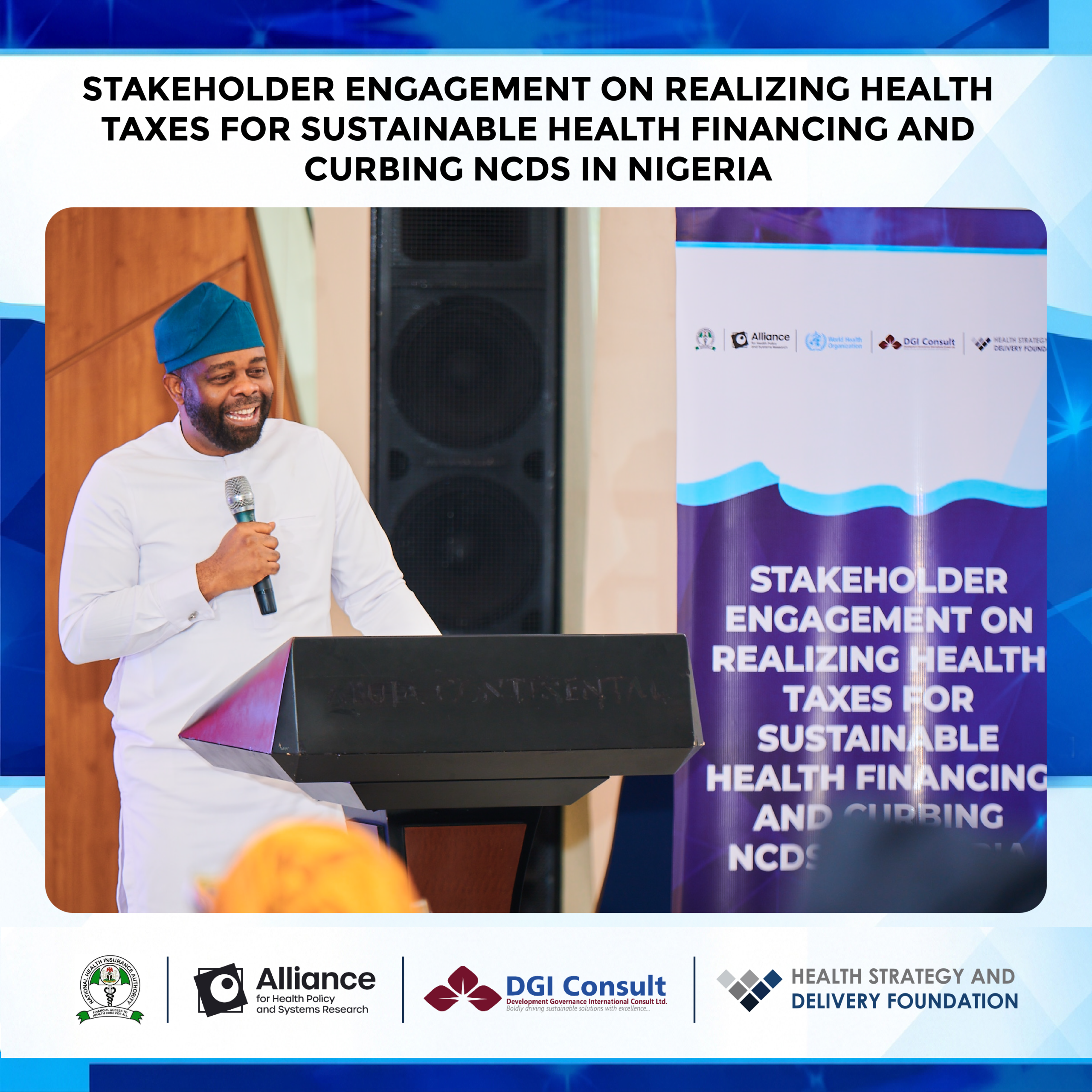
Opening the engagement, Dr. Kelechi Ohiri, Director-General & CEO of the National Health Insurance Authority of Nigeria (NHIA), framed health-tax reform as a responsibility that extends well beyond the health sector.
He highlighted its intersection with taxation, fiscal policy, legislation, public financial management and domestic resource mobilisation, while stressing its dual potential to influence unhealthy consumption and expand resources available for health.
Dr. Kelechi Ohiri also pointed to the current momentum around sugar-sweetened beverage taxation as an opportunity to move from policy ambition towards implementation, while opening a broader conversation around tobacco and alcohol taxation.
The central question he put before stakeholders was clear:
What will it take to move viable health-tax reforms through Nigeria’s policy, legal, fiscal and administrative systems and translate them into effective implementation?
The workshop therefore set out to move beyond the case for health taxes and focus more directly on the conditions needed for reform to work in practice: coordinated action, institutional ownership, implementation readiness and clear pathways from policy to impact.
#HealthTaxes #HealthFinancing hashtag#NCDs #HealthPolicy #Nigeria #UHC