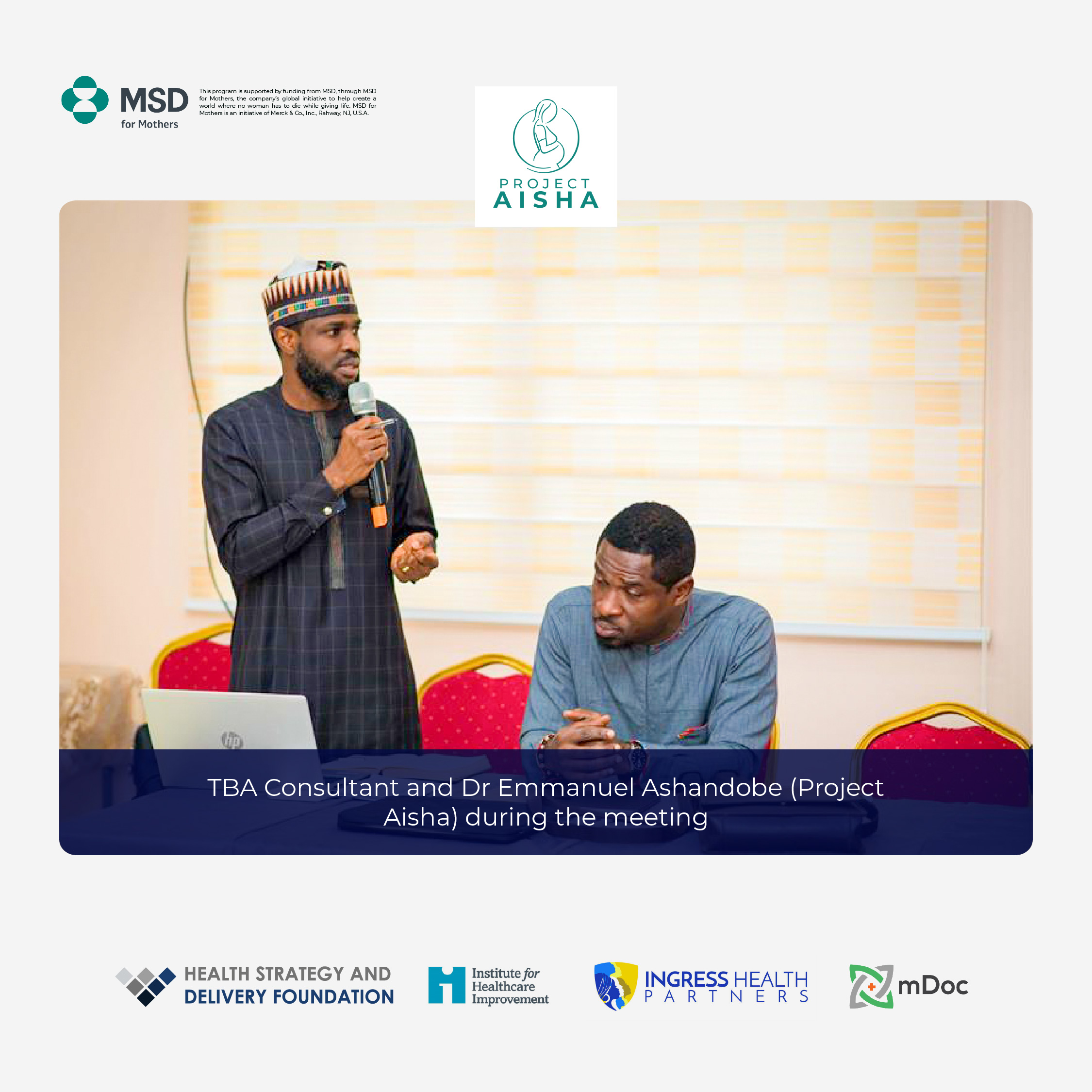
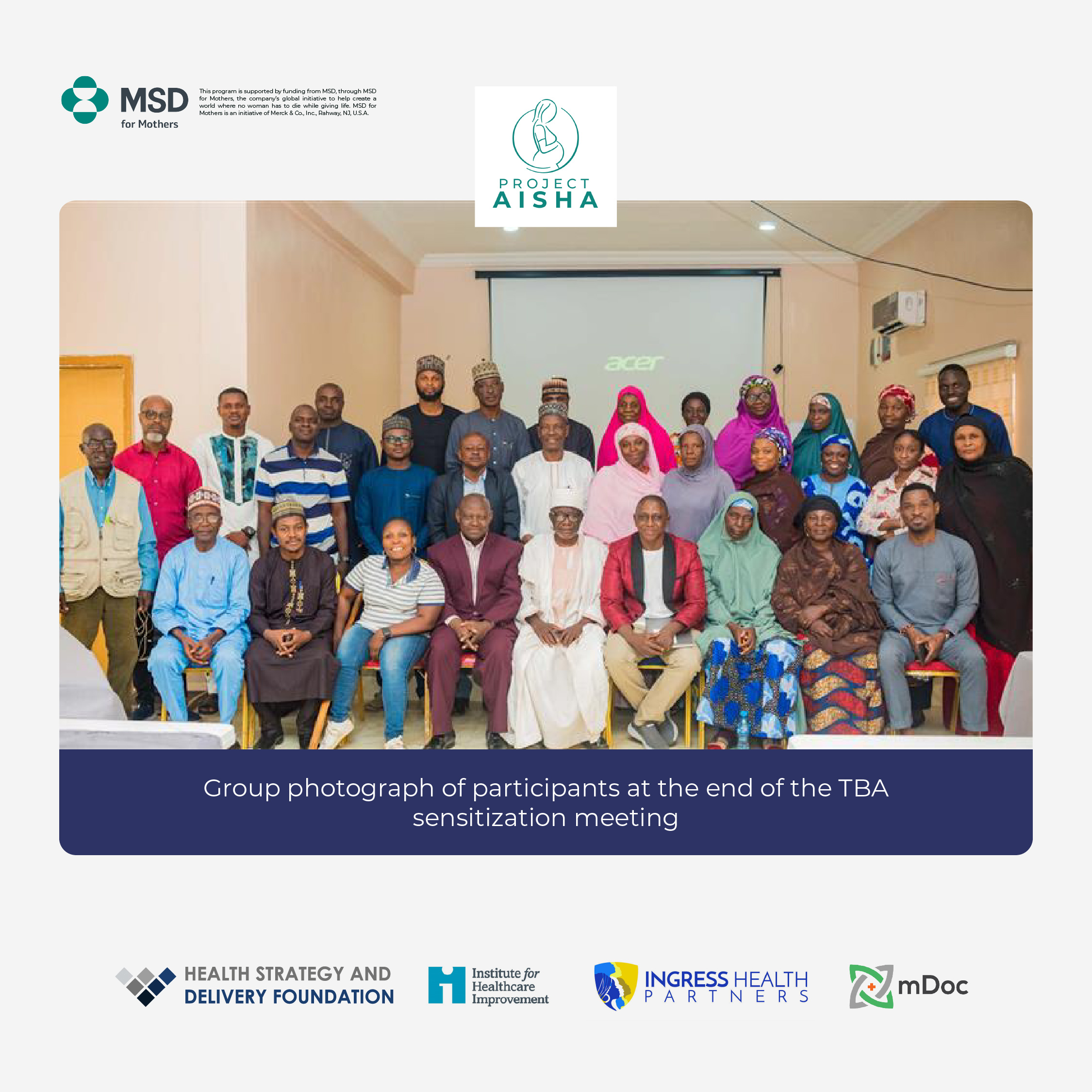
In Kaduna State, Traditional Birth Attendants are more commonly utilized for childbirth than formal health facilities, leading to concerns around safety, lack of regulation, weak integration with the health system, and limited inclusion in policy development.
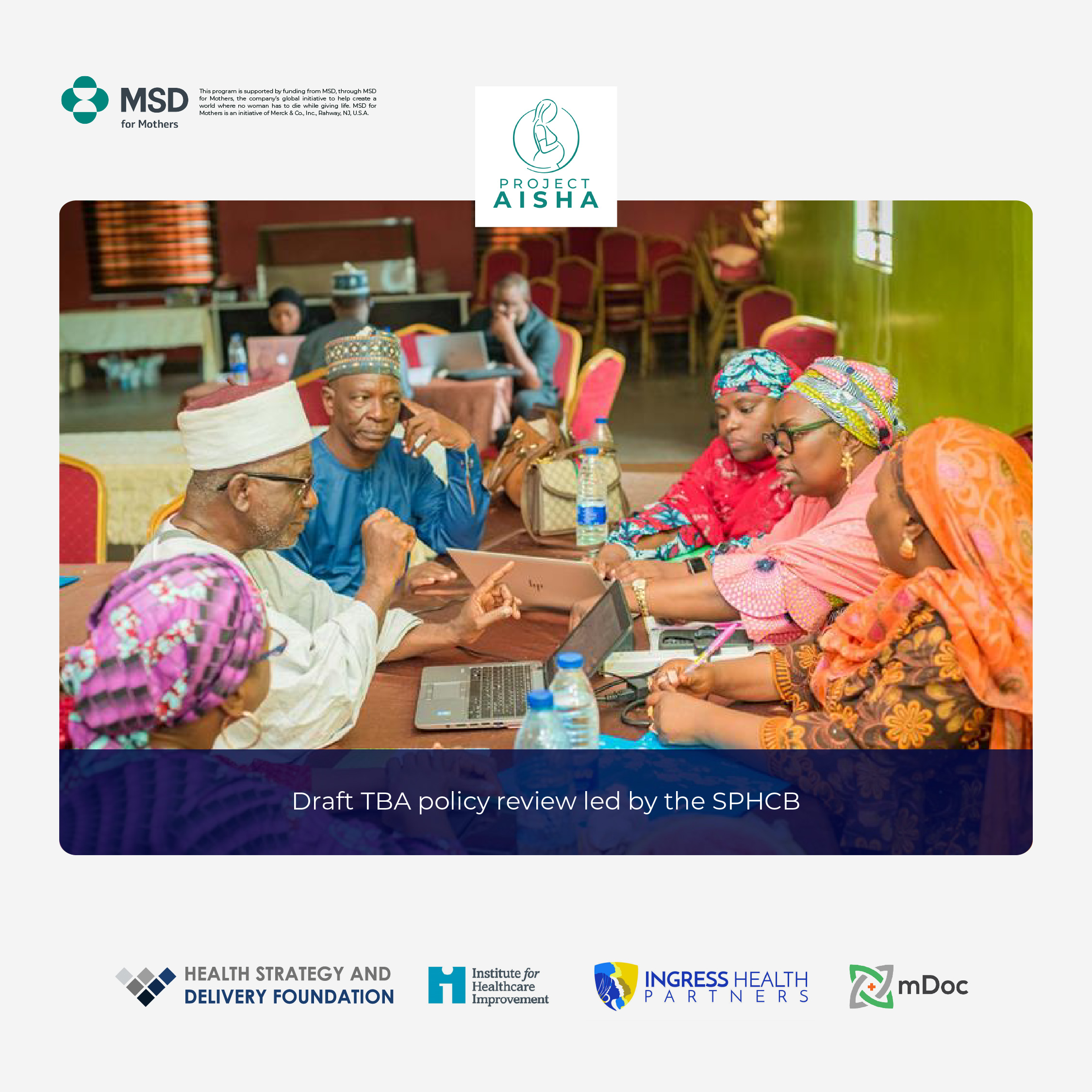
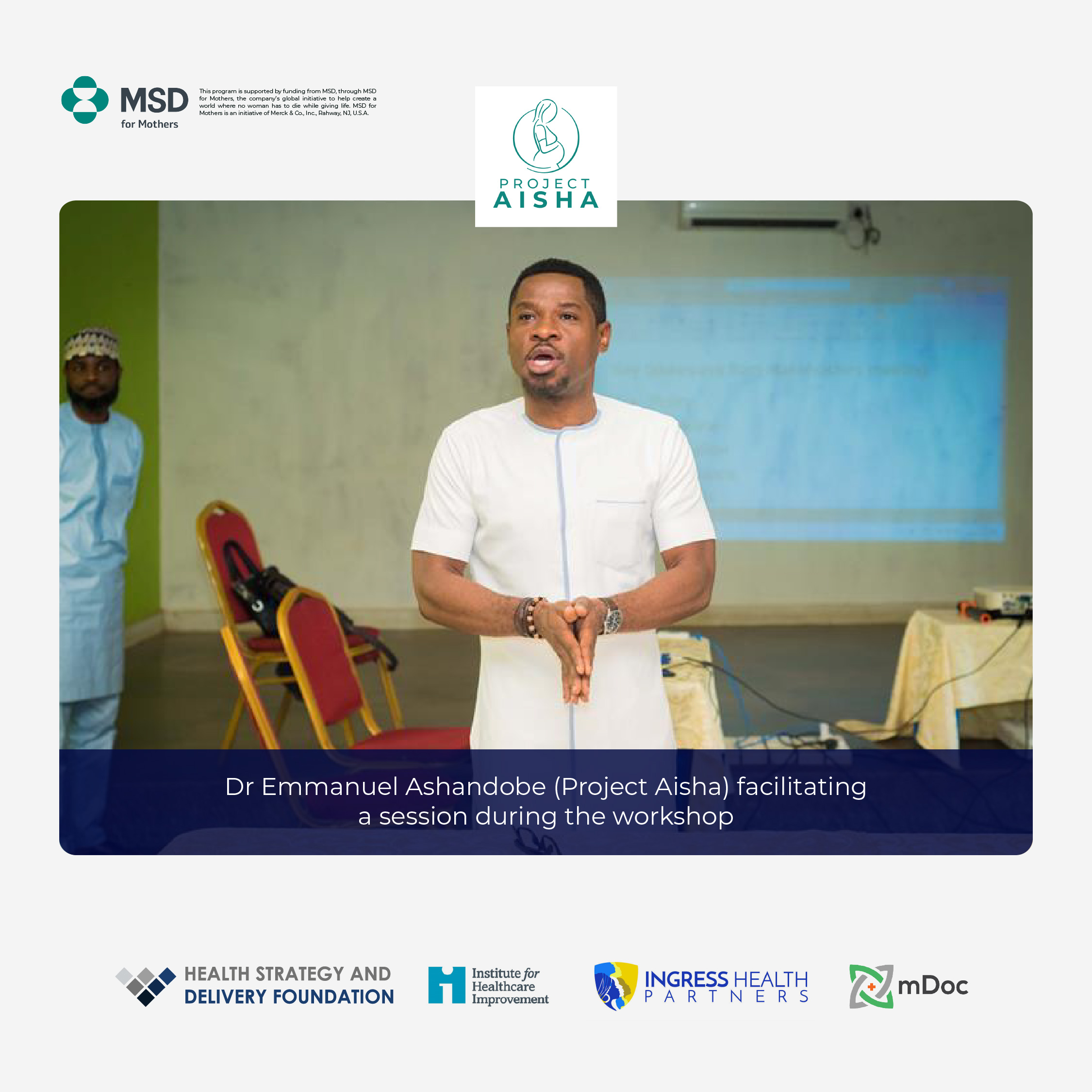
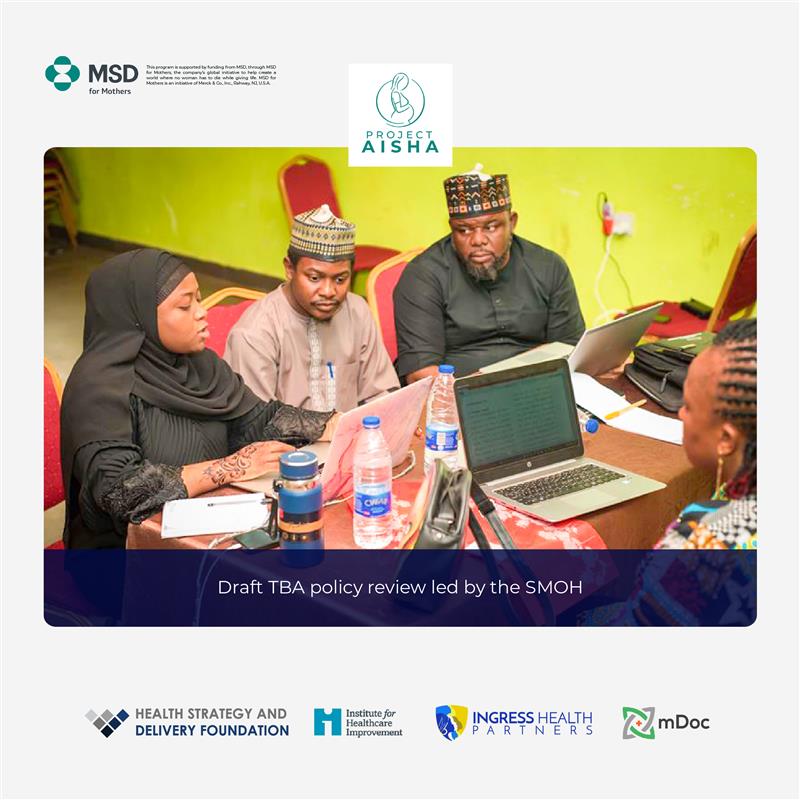
Building on insights from our recent Maternal Health QI leadership Summit in Lagos, Project Aisha with support from MSD for Mothers provided financial and technical assistance to the Kaduna state, including the engagement of a consultant, to facilitate the development of the state’s first Traditional Birth Attendant (TBA) Policy.
The initiative fostered strong partnerships and shared responsibility, establishing a clear framework for TBAs to contribute meaningfully to the health system, not as substitutes for skilled health workers, but as trusted community partners who provide support, guidance, and timely referrals. Through this policy, TBAs help ensure that no woman gives life at the cost of her own.
Reflecting on the importance of this policy, one of the key stakeholders said, “All thanks to Project Aisha, the TBA policy have been long overdue in the state, it will help regulate the activities of TBAs in the state viz-a-viz the TBA guideline”.
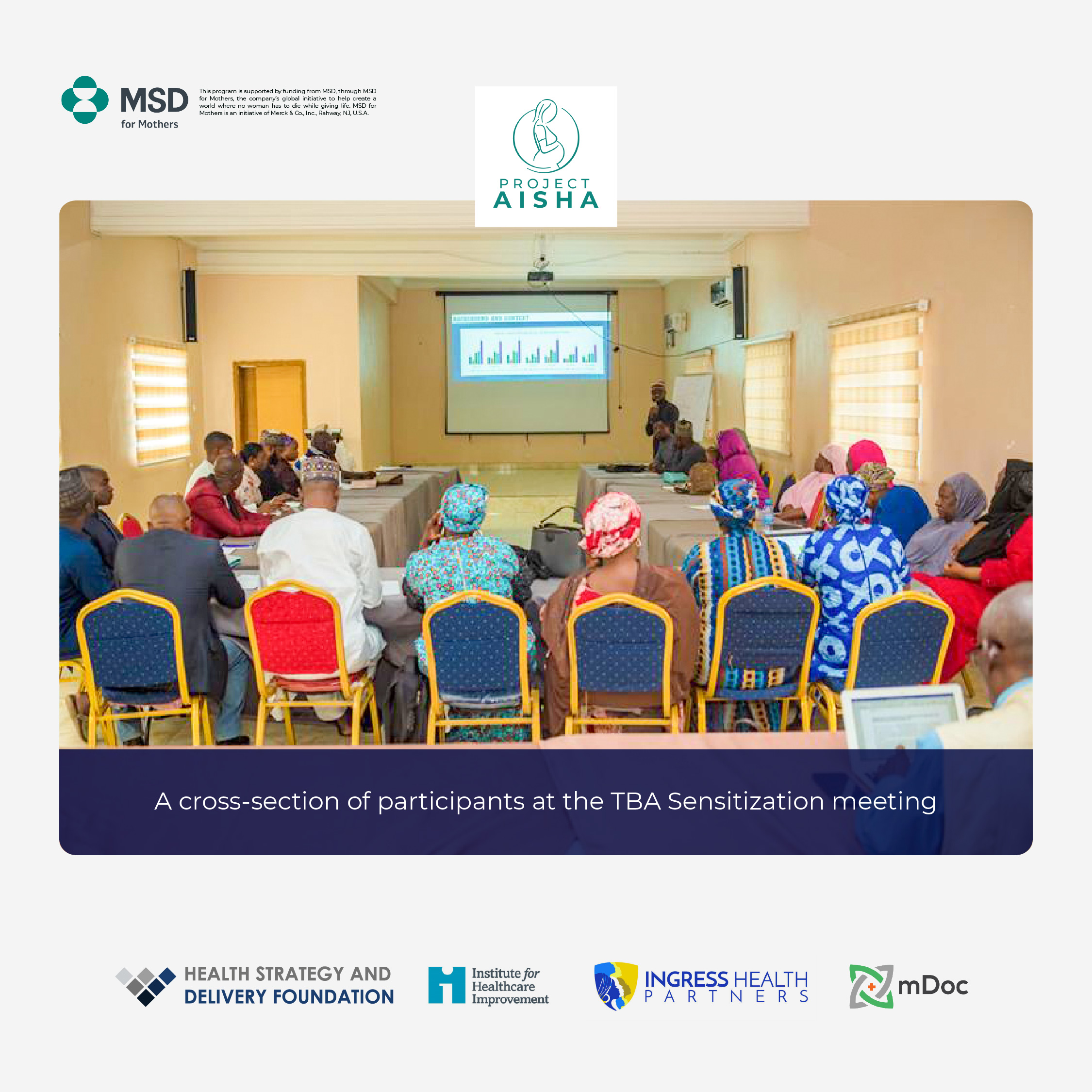
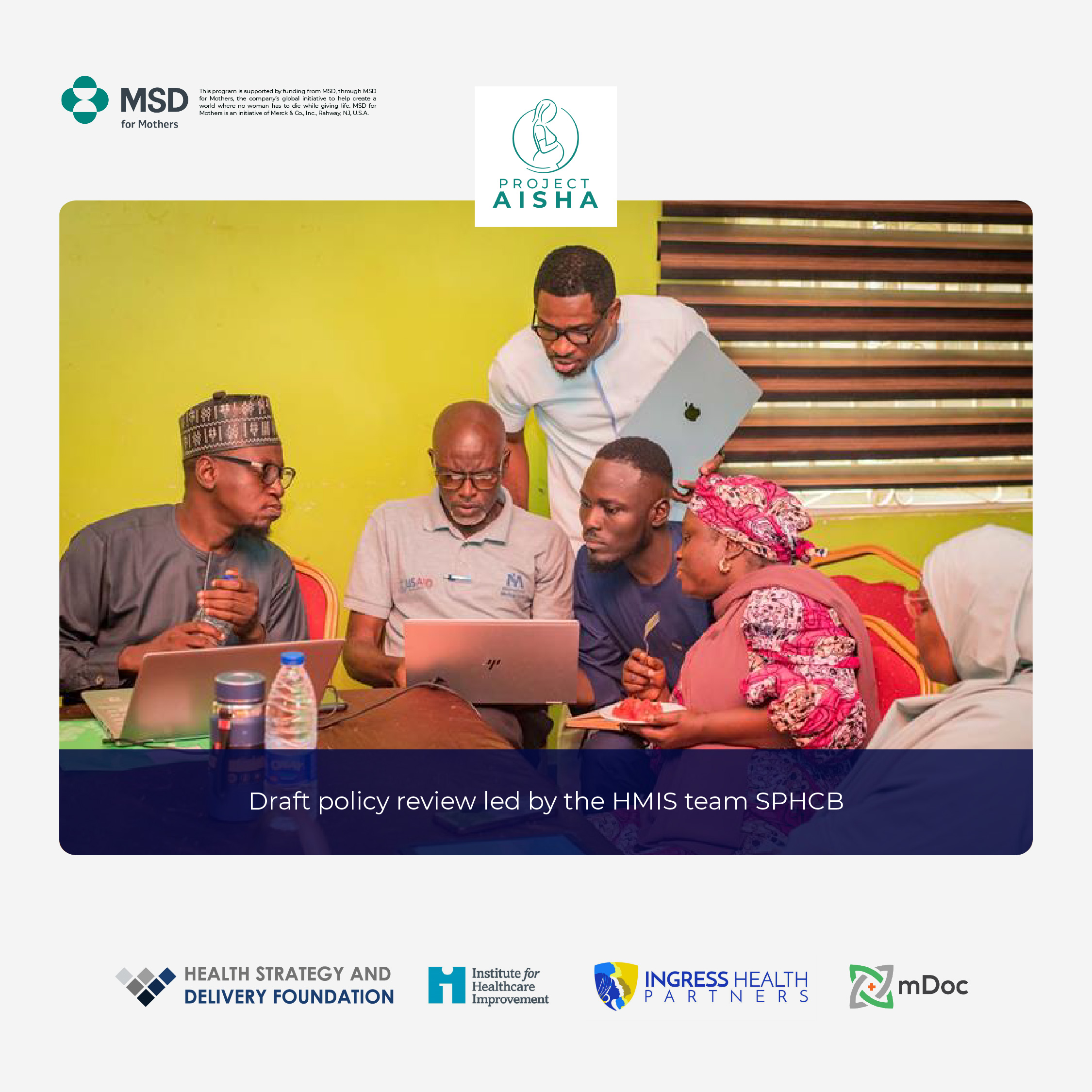
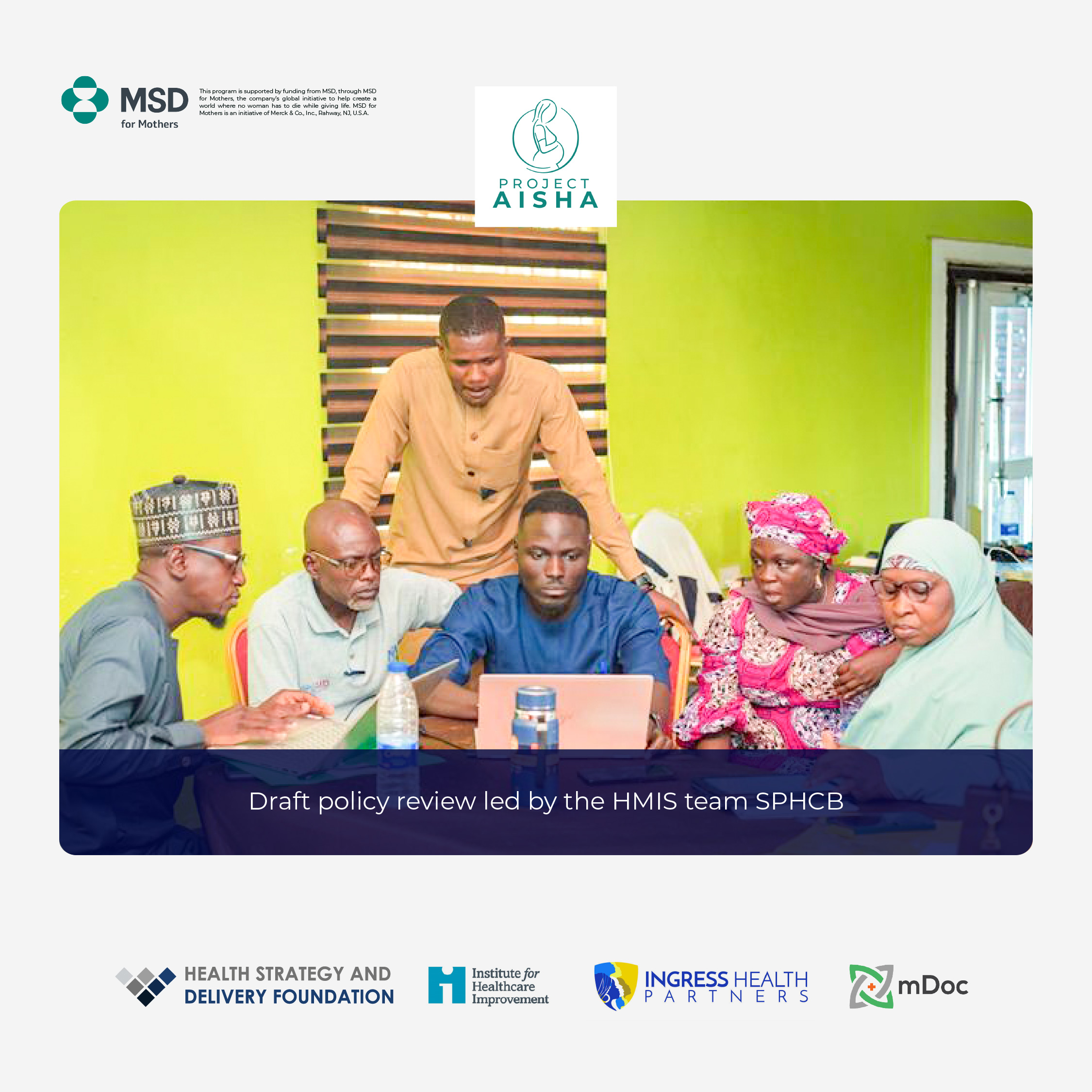
Project Aisha employed the all-inclusive approach through the involvement of critical stakeholders ranging from the National Primary Health Care Development Agency (NPHCDA), KSMOH, KSPHCB, NANNM, NTLC – The National Transgender Leadership Council, partners, CSOs, Traditional leaders, representatives of Ward.
Development Committees (WDCs) and TBAs representatives to co-develop the TBA policy document that reflects the Kaduna states’ context.
The team will continue to support the state in translating this new policy into practice across all the LGAs.